

Denmark’s data center industry expands as energy pressures grow.
Nearly 100 participants joined Danish Data Center Industry’s networking meetup on 9 December, a record-setting participation for DDI networking meetups to date. CEO Henrik Hansen opened the day by reflecting on the industry’s momentum and its evolving responsibilities. He highlighted that DDI is becoming increasingly outward facing, not only on export and international business development, but also on community engagement and public perception.
Merima Dzanic, Head of Strategy & Operations, presented DDI’s new whitepaper, “Denmark as a Data Center Nation: Building the Third Pillar of Europe’s Green and Digital Future,” which presents a clear framework for how data centers can evolve from passive electricity consumers to active partners in the energy system, thereby strengthening flexibility, supporting renewable growth, and attracting high-value digital investments.
The message was clear: the sector stands at a pivotal moment. As Merima explained: “We have 21st century technology running on 20th century infrastructure.” At the same time, Denmark has a structural advantage as “one of the only countries with two nationwide green energy infrastructures The third pillar is a competitive advantage for digital infrastructure. Our green electricity grid combined with gas grid is a unique advantage.”
AI data centers push extreme density and faster delivery
The hosts from Schneider Electric highlighted how AI is driving a step-change in how facilities must be designed, built and operated. Henrik Lindberg described the rapid escalation in density. “Around the corner is 1000 kW per cabinet.” Time to market is increasingly decisive, and technologies such as NVIDIA SuperPods keep pushing rack density year after year, forcing continuous redesign.
Schneider is positioning itself to support this evolution with liquid cooling, integrated power trains and reference designs developed alongside NVIDIA. Niels Frost of Schneider Electric added that with higher density comes higher risk. “The cost of a breach is consequential on bottom line and on stock.” Cybersecurity, compliance and visibility across the full power and cooling chain are now central to operating AI-scale environments.
Energy flexibility central to next-generation data centers
DTU’s Henrik Madsen argued that Denmark’s current energy model cannot support the scale and speed of digitalization without major structural change. “We need to make a disruption. If we don’t disrupt, we won’t be able to compete.” Today’s grid expansion timelines lag far behind data center build times, creating a growing mismatch between needs and capacity.
He called for a stronger focus on digital energy hubs, AI-based implicit flexibility and real time dynamic pricing to allow operators to actively support the system. In his view, digitalization is not a challenge to the energy system, but rather a tool to make it coherent, integrated and future-proof.
Energy hubs and industrial clusters create new pathways for green growth
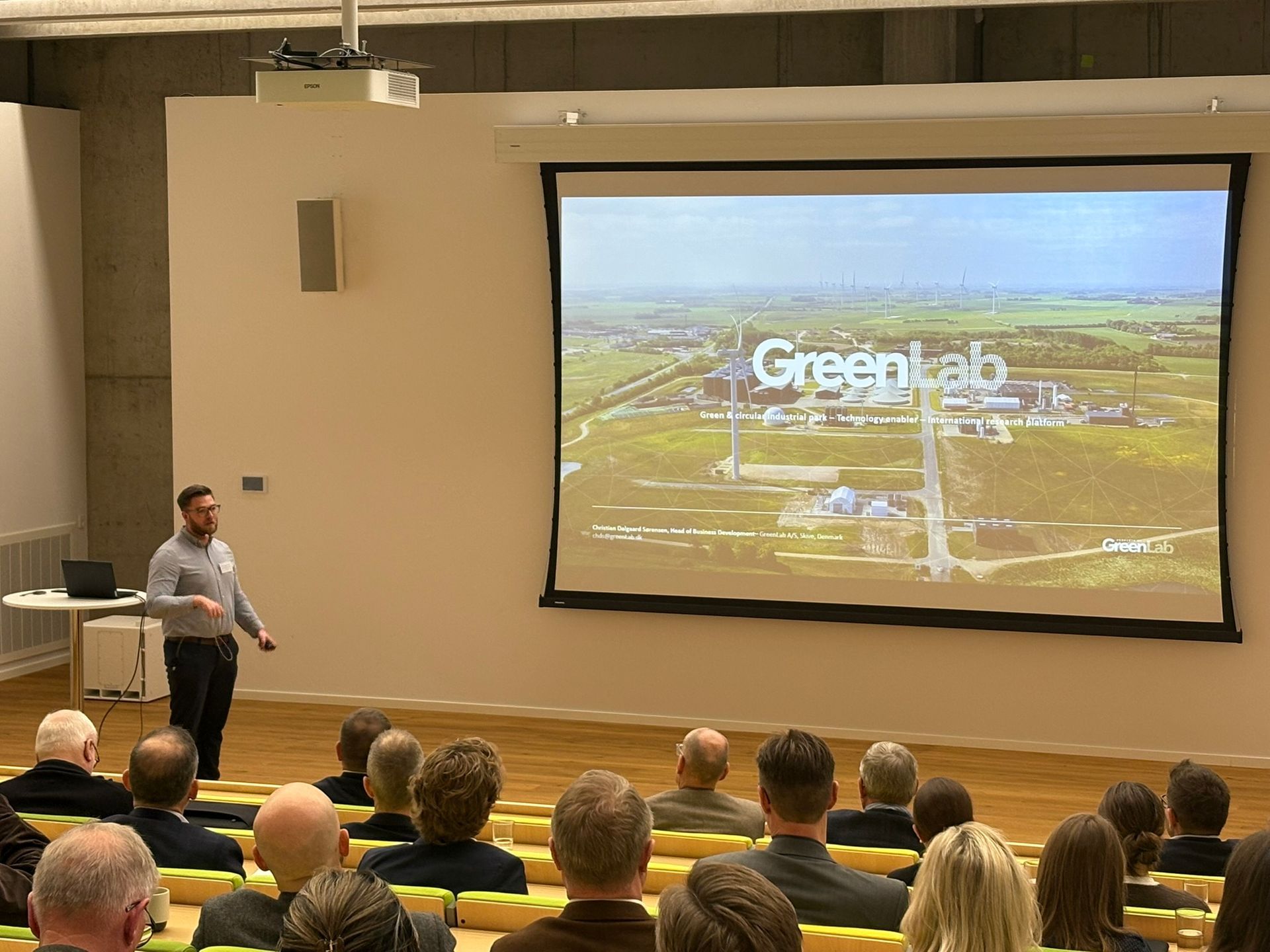
GreenLab’s Christian Dalgaard Sørensen showed what a future energy system can look like when companies collaborate to generate, store, and share resources on-site. “We are trying to create the energy system of the future.” He explained that while technology is advancing quickly, the commercial frameworks are still catching up. “It is easy to draw this value chain on a board, but creating the commercial contracts is more challenging.”
He emphasized that data centers should not be seen as isolated infrastructure but as part of broader industrial ecosystems where energy, heat, byproducts, and storage interact. “It’s not a question anymore. I believe it’s the solution.”
Denmark’s competitive edge relies on faster planning and grid expansion
Green Power Denmark CEO Kristian Jensen provided a frank outlook on Europe’s shifting energy landscape. Denmark’s high share of renewable electricity and its strong electrification profile are competitive strengths, but they are not guaranteed. He warned that Denmark risks falling behind due to slow permitting, grid congestion and rising costs. As an example, he highlighted how grid connection costs for a 100 MW solar project have increased 1300% since 2019.
He stressed that while Denmark can still compete with US on electricity prices, this advantage will only hold if infrastructure expansion and local planning keep pace with demand.
Panel: Exploring the need for a national data center and energy strategy
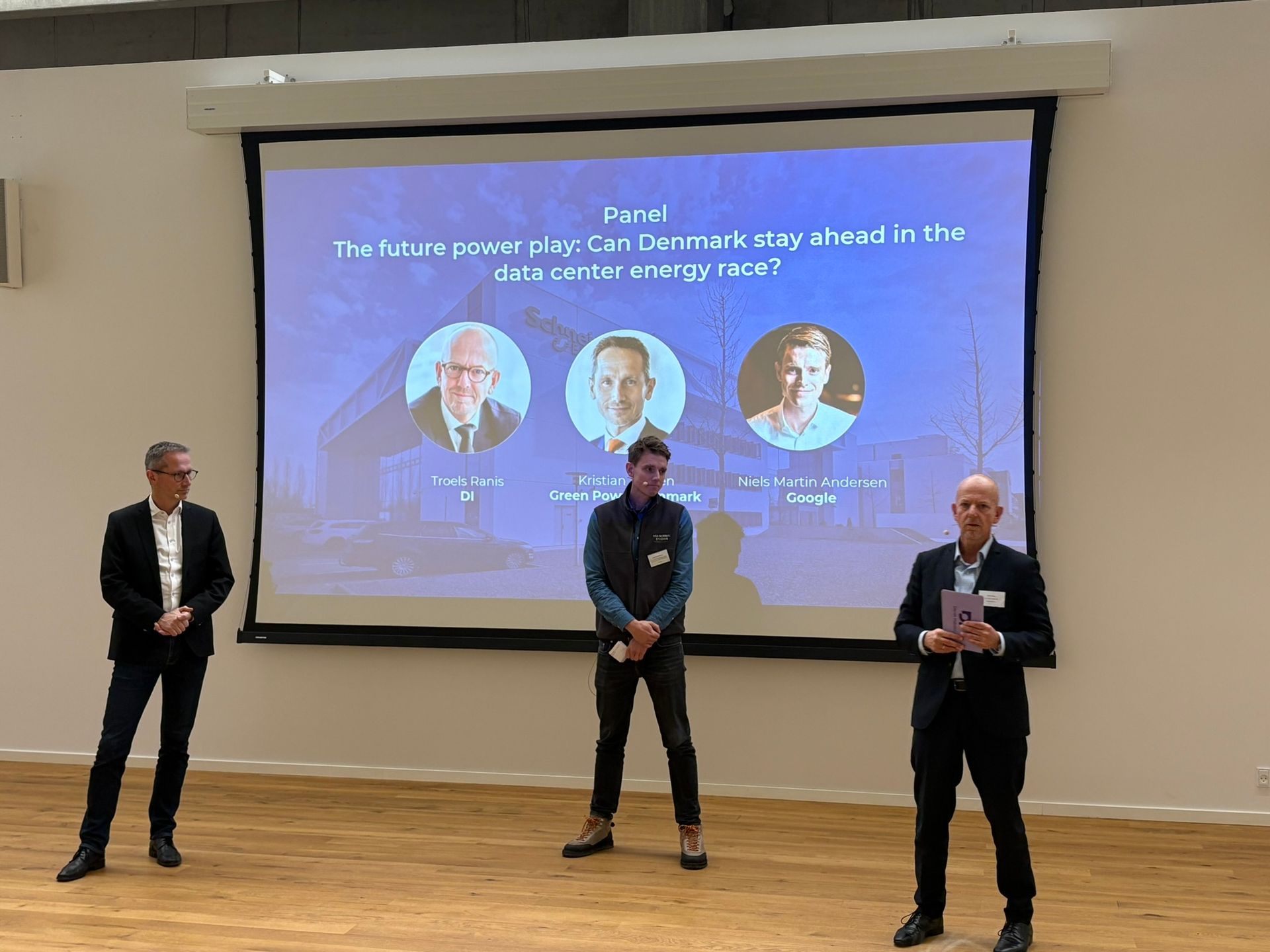
The final panel of the day, which featured Kristian Jensen, Troels Ranis of DI Energi and Niels Andersen from Google, moderated by Henrik Hansen, investigated both opportunities and risk for the future of the industry.
Henrik Hansen challenged the panel as to whether, with the growth of the industry expecting to triple in the coming 5 years, we can meet this demand with the existing infrastructure. In other words: can Denmark continue to be a digital frontrunner with the current energy system?
The panel agreed that the broader industry together with utilities and local/national authorities need a more common understanding of what is needed, and how we solve the challenges ahead. While there are many advantages for Data Centers in the Nordics, such as an abundance of clean energy and good framework conditions, the industry still has challenges with regulation, high-level government understanding, transformation of the energy system, and how to get more capital investments into the market, and that this should be top-of mind for a coming government after next year’s election – or preferably before.
Niels Andersen captured the moment clearly: “Industrial history is being made right now.”
Contact us


Camilla Grabowski Hansen
Communication & Partnership Manager
camilla@datacenterindustrien.dk
+45 70 35 11 42